In Iceland, Mother Nature doesn’t just build other-worldly landscapes, she’s a total show off. She’ll stun you with scenery that takes your breath away, then throw sideways rain at your face just to make sure you’re paying attention. We experienced both in the space of a week.
During that time, we chased waterfalls on Snaefellsnes Peninsula, took a turn at the Golden Circle, then back to the southern coast all the way to Jokulsarlon Glacier Lagoon. It was an adventure like no other, but there were lessons to be learned the entire way. Things like waterproof jackets and foot gear. They aren’t just a suggestion. They are a necessity. And every single rock, river, and cliff on this island comes with a backstory weirder than the last. That includes waterfalls, and most come with freaky cool legends of Vikings and the Hidden Folk.
Between dodging invisible elves behind Seljalandsfoss, keeping a side-eye for the Viking treasure chest at Skógafoss, and standing beside the raw power and energy of Gullfoss, I realized you don’t just visit Iceland’s waterfalls. You survive them, laugh at the ever-present wind, and just embrace the wildness of it all.
KIRKJUFELL. Okay, technically that’s a mountain, but it does offer a three-in-one waterfall known as KIRKJUFELLSFOSS. The falls are beautiful, but the mountain itself steals the show. It rises above the coastal flats like a solitary icon, its steep peak perched atop long sloping flanks built from layered lava, sandstone, and tuff. Can you tell I’m married to a geologist? LOL
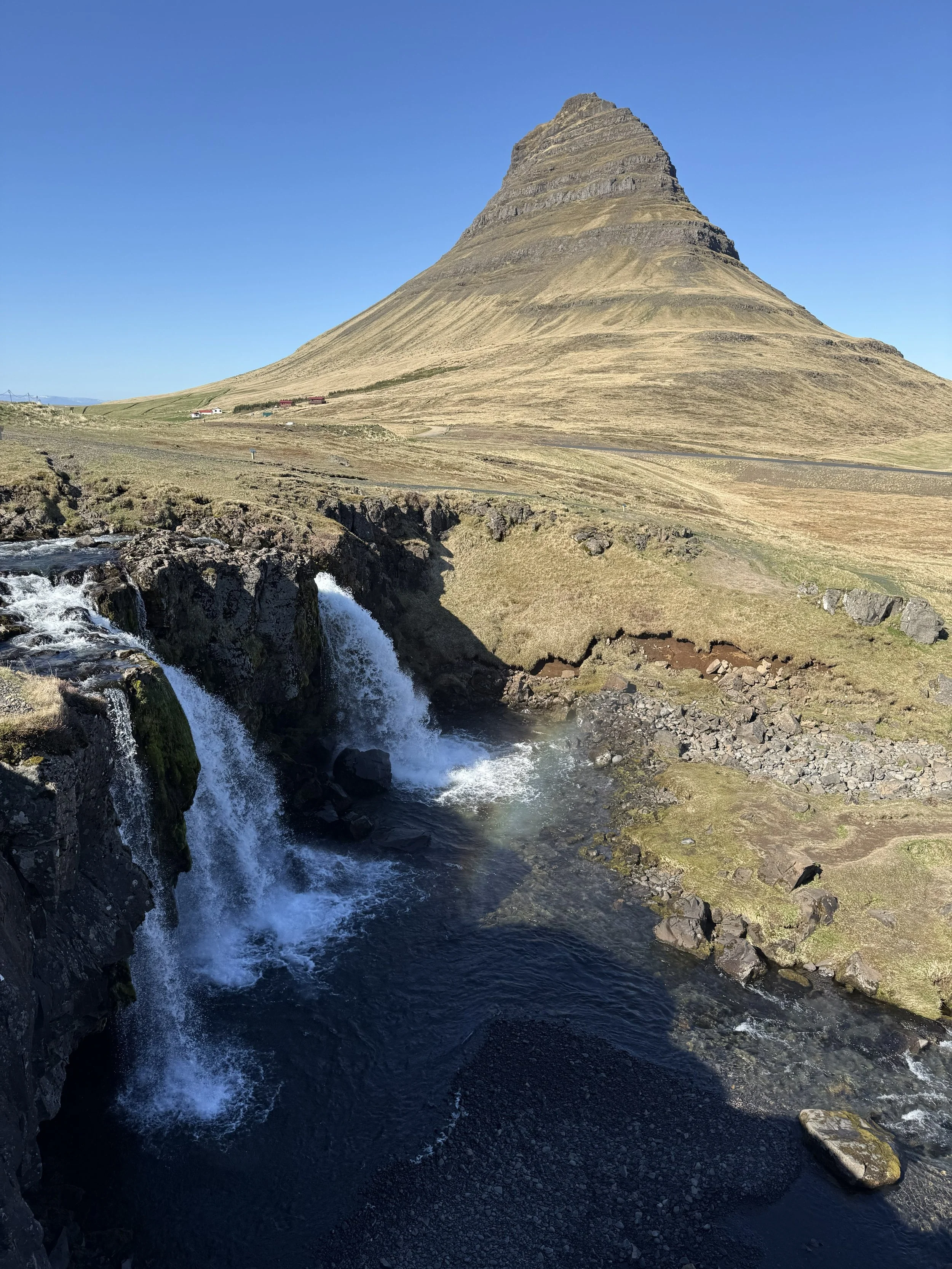
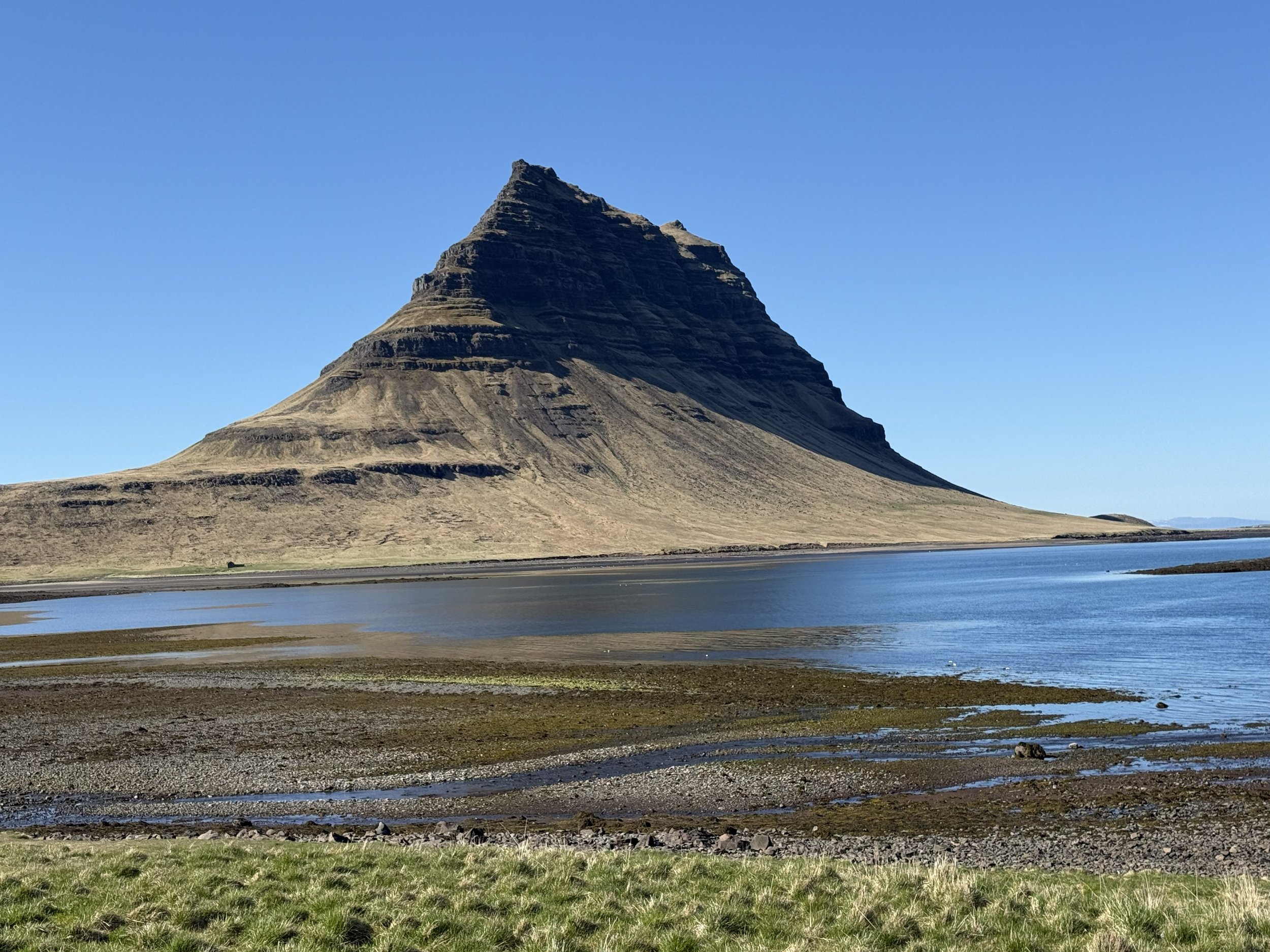
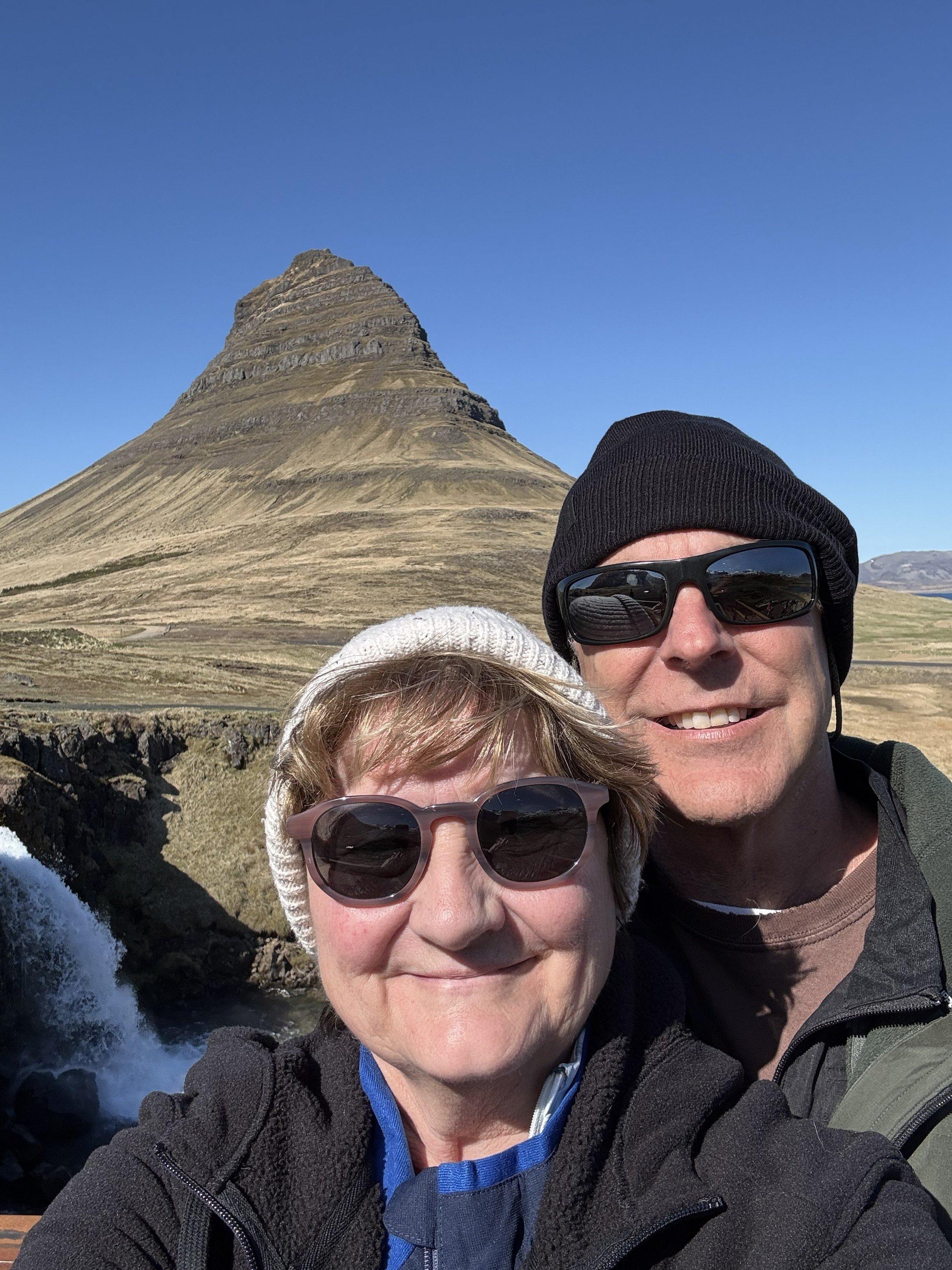
Standing next to the rushing tiers of Kirkjufellsfoss with the wind howling off the Snaefellsness Peninsula, the mountain looks like a giant stone wizard hat left behind after a rowdy night. Local lore warns of ghosts, trolls, and mischievous Huldufolk (translation: hidden people) lurking in the surrounding lava fields and I admit to feeling a wee bit disappointed at our lack of encounters. Not that we needed other-worldly visitors to make the trip memorable, but it would’ve added an interesting layer. LOL. Still, folklore connects the unseen folk with Iceland’s dramatic geology and unpredictable weather, and honestly, after nearly losing my beanie to an unexpected thirty-knot gust while trying to take a selfie, I’m willing to believe.
GULLFOSS
All Icelandic waterfalls command attention, but this one was different. Imposing and overly dramatic, this thing steals your breath, your words, and commands absolute respect. For a few long seconds, all you can really do is stand there and stare, absorbing the physical force of it all as the river gathers itself for the spectacular push over the edge, only to disappear into the canyon with a thunder of water and mist. It is purely a sight you must see to believe. Watch this video!
While the video does a decent job for the shape and size of the falls, it’s impossible to capture the sheer majesty and awe it inspires. The elongated arrow shape of the land creates a deafening roar as the water plunges from both sides, a total of 105 feet into a narrow and rugged canyon that its actively carving. Some viewpoints show the river and mist like it’s vanishing straight into the earth.
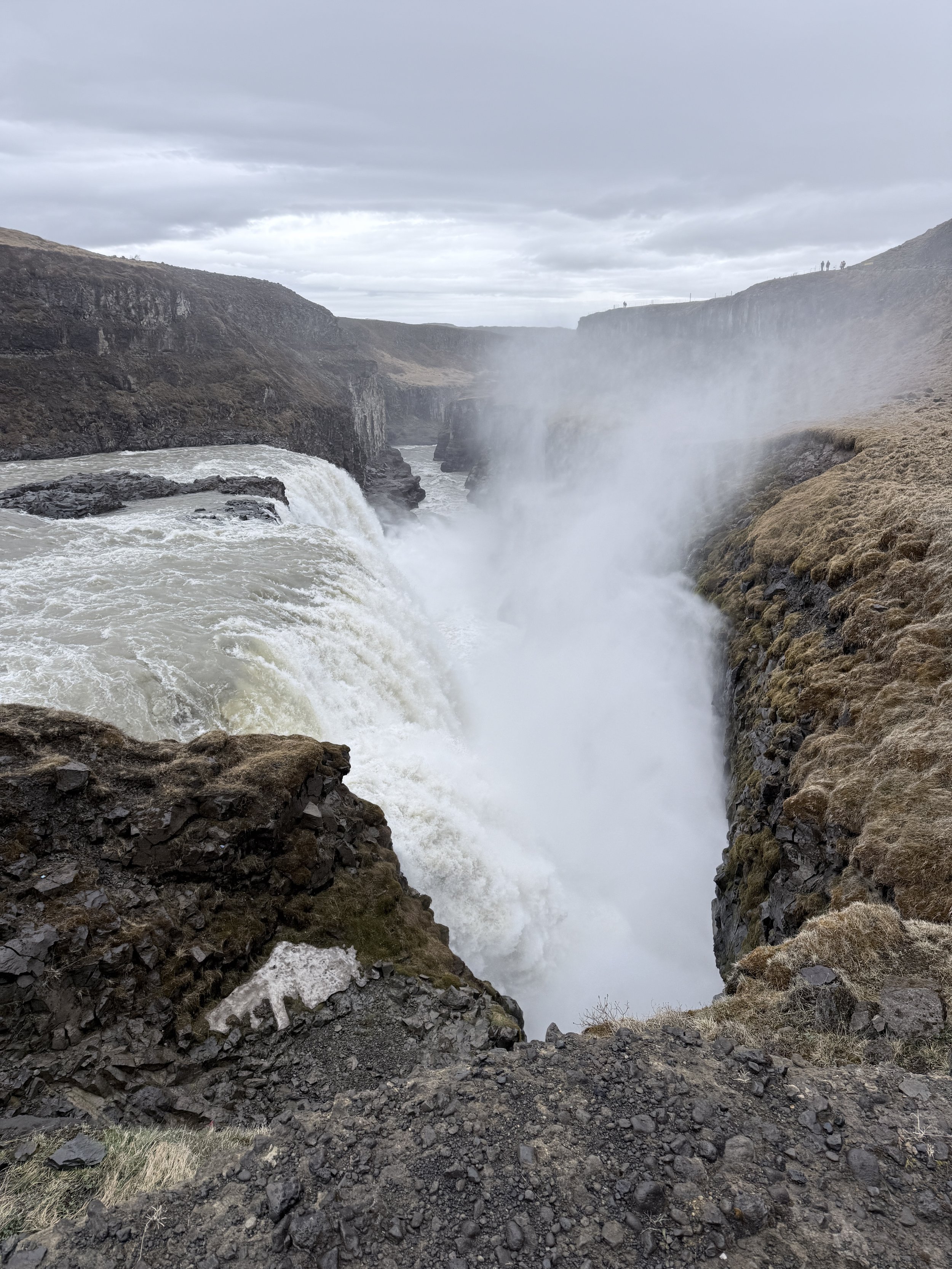
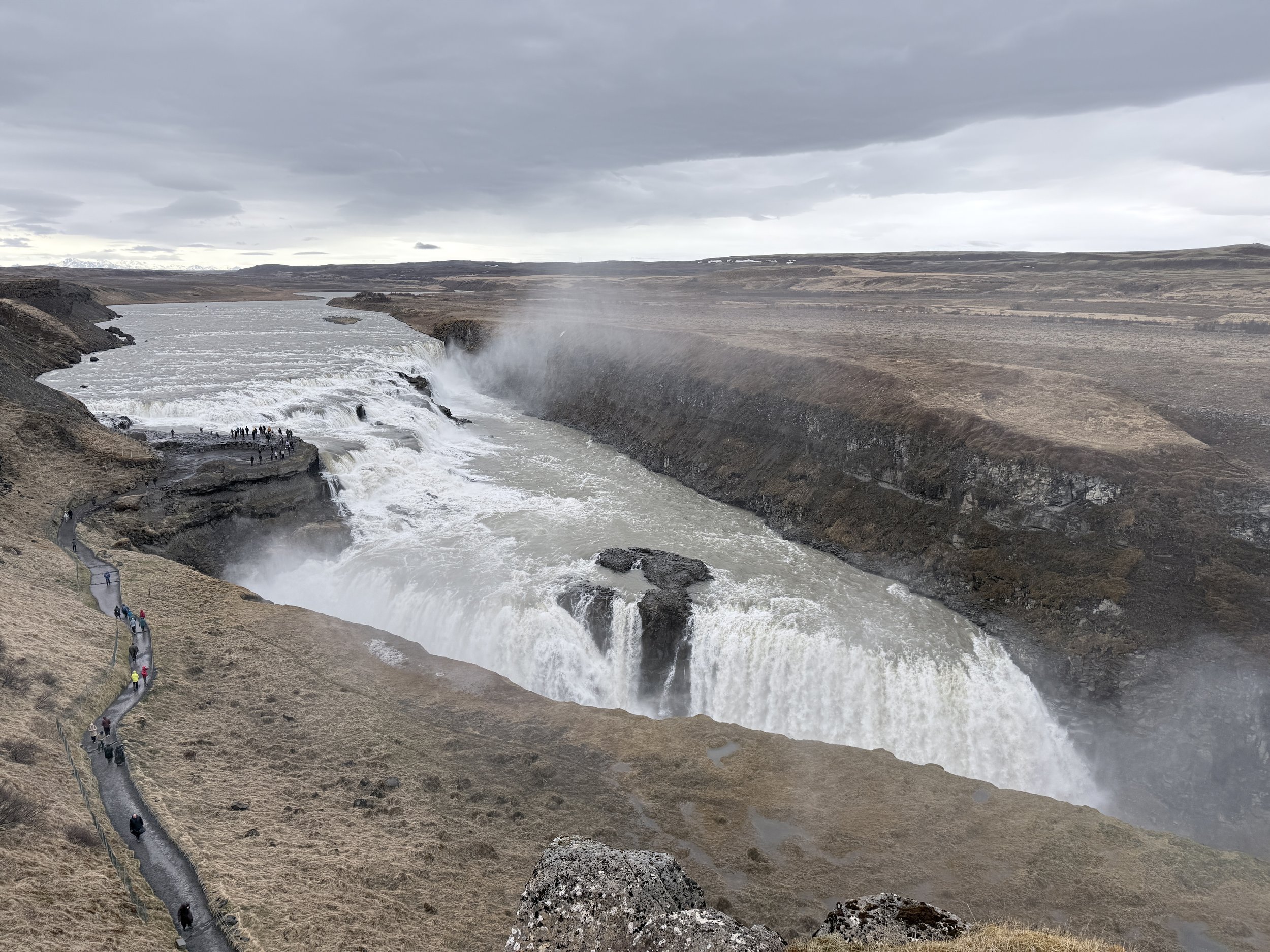
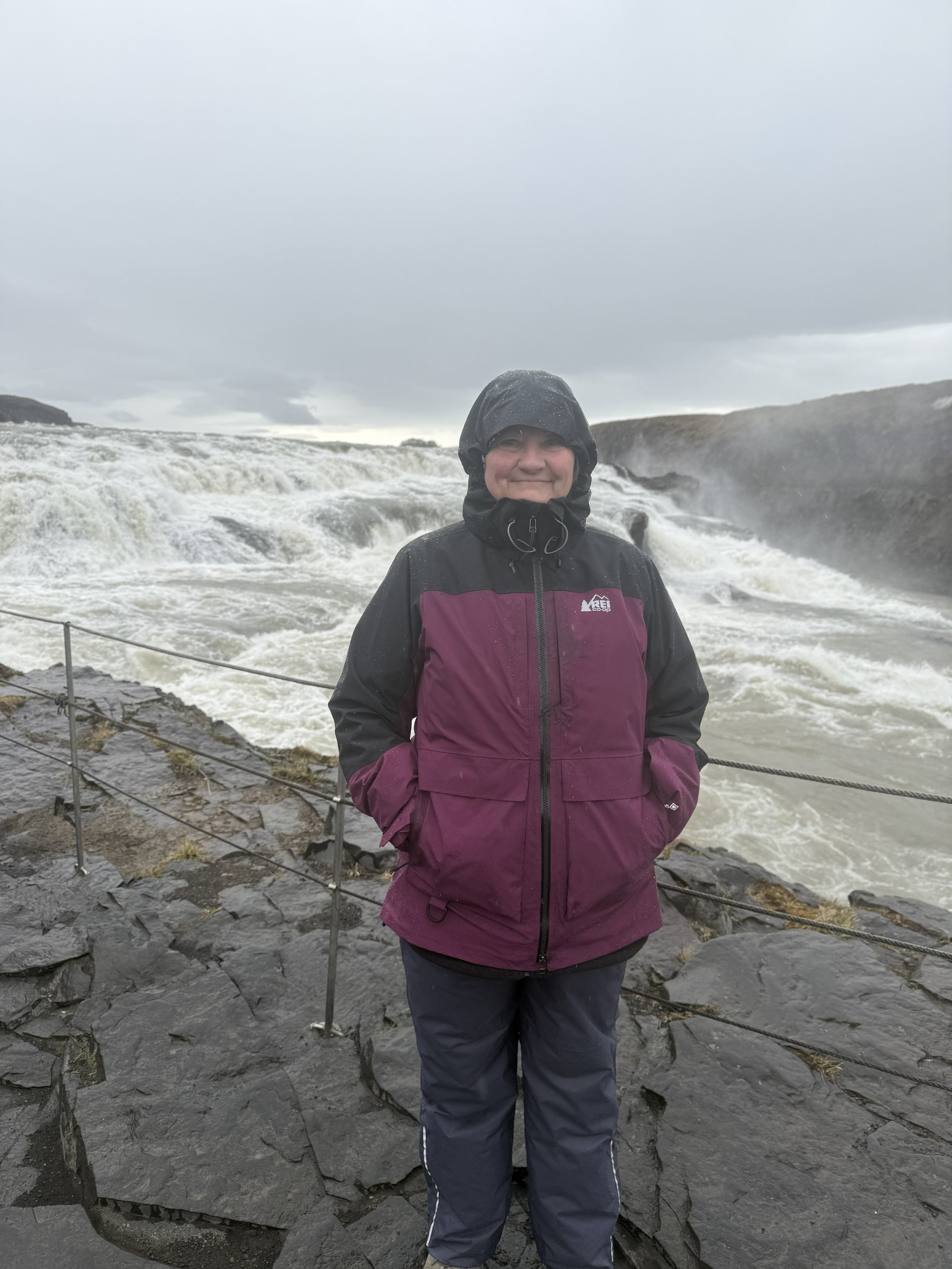
It was drizzling rain the day we visited, but no matter. The non-stop spray from the falls would soak you regardless. It is a serious monument to nature. Standing beside this astonishing display of glacier meltwater, it’s hard to believe it was ever at risk of being destroyed. Yet, in the early 1900’s foreign investors wanted to dam the waterfall, intent on building a hydroelectric plant. If not for the relentless conservation efforts of Sigríður Tómasdóttir, the daughter of a farmer who owned the land, this incredible natural wonder would have been lost.
The world owes her a huge debt of gratitude. Today, Gullfoss is widely viewed as the birth of Iceland’s nature conservation. And rightly so. After exploring the falls, we visited the wonderful gift shop and café where I picked up this cutie… I call her Dame Lizzie of Gullfoss and like to think she might be one of the unseen folk of legend. She stays at my writing desk, reminding me to always remain curious.

SELJALANDSFOSS (Or The Tale of Two Falls)
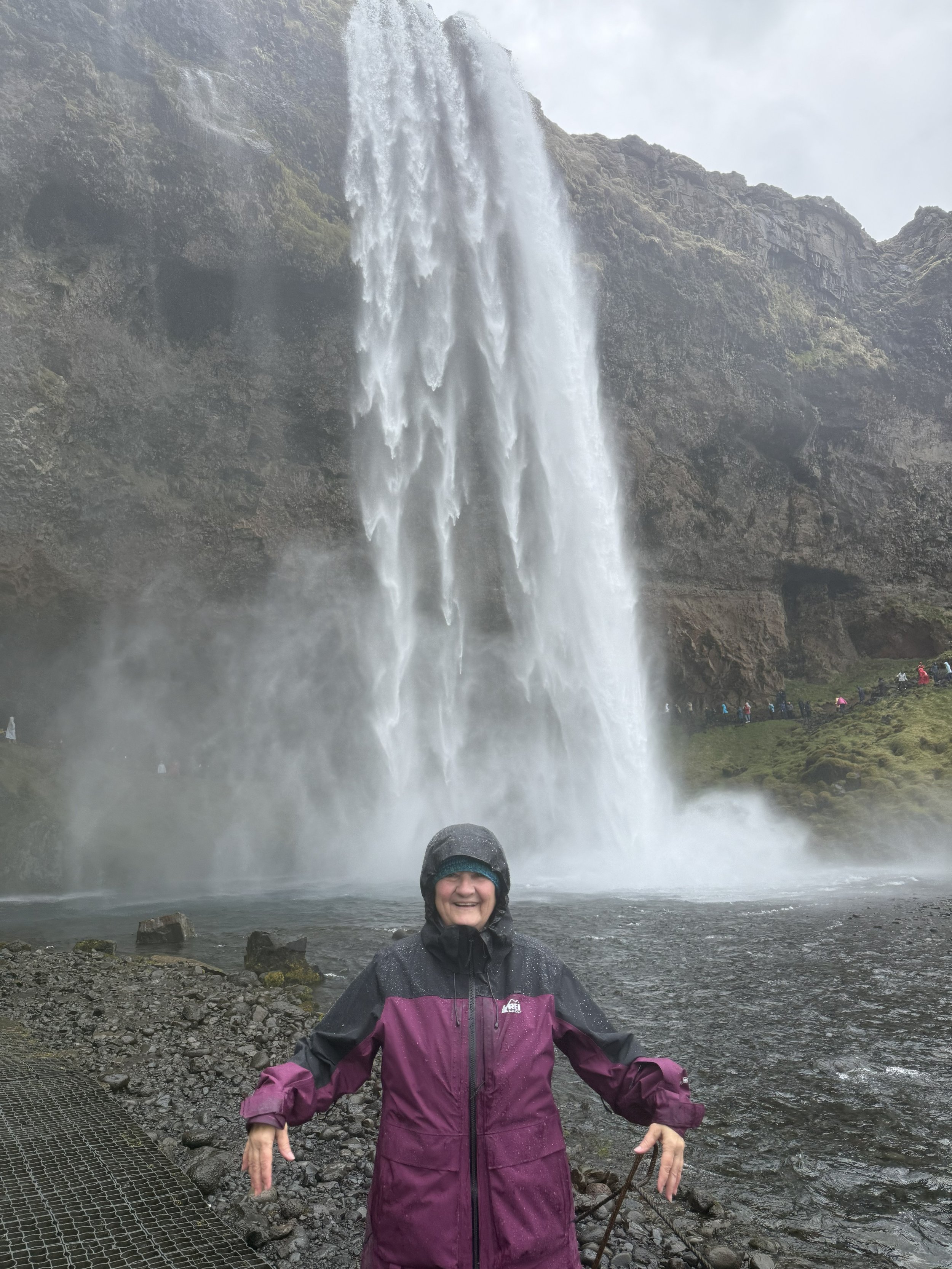
This spectacular waterfall is the ultimate Icelandic extrovert. It’s 197-feet of glacial meltwater from the unpronounceable Eyjafjallajokull volcano, hurling itself off an ancient sea cliff right beside the Ring Road. It lures you in with a footpath that winds behind a roaring curtain of water, then baptizes you with drenching precision despite the promise of waterproof gear. I’m offering proof with a before, during, and after shot. Trust me when I say there’s no avoiding the spray. But hey, it’s all part of the fun, right?
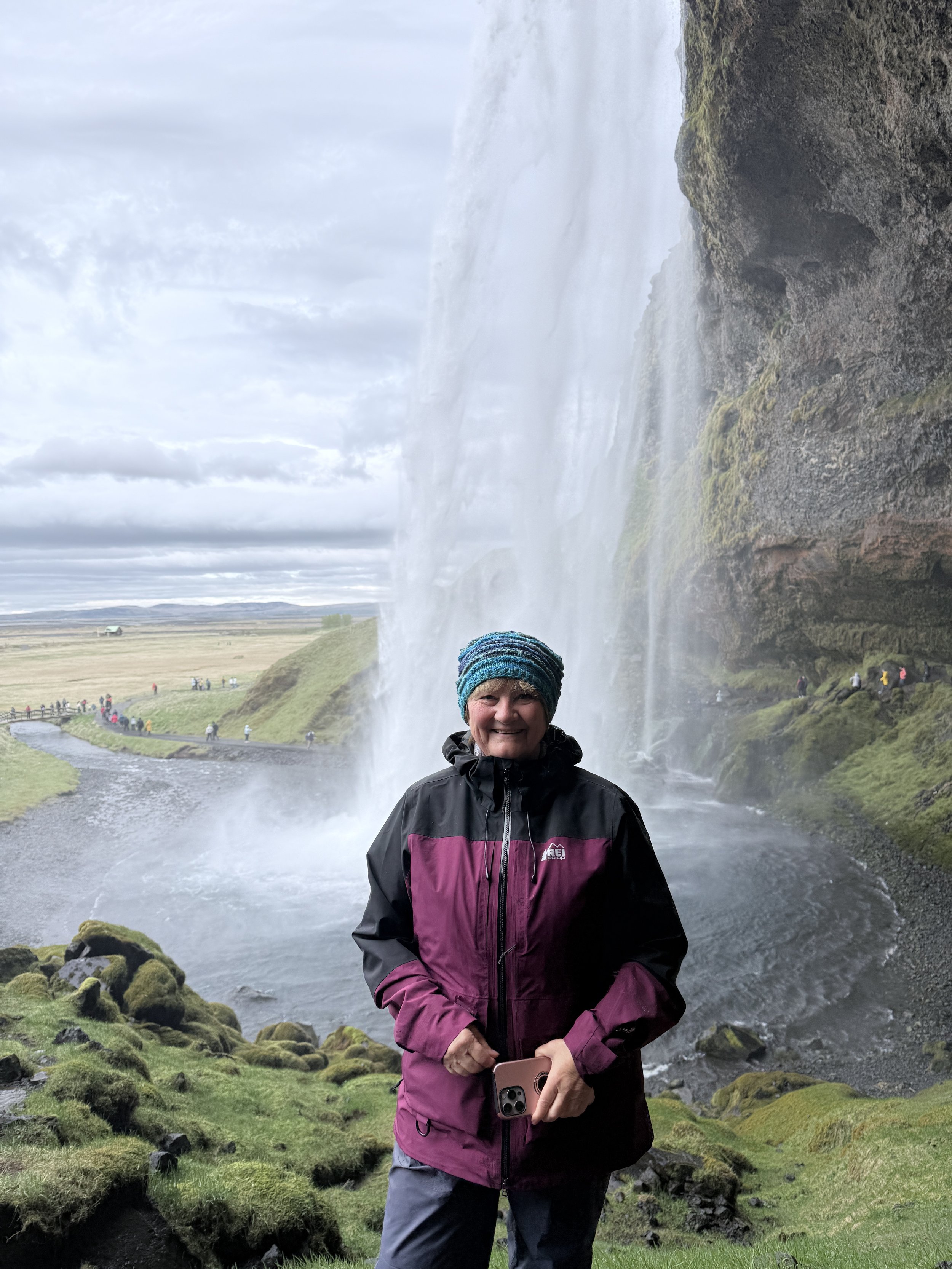
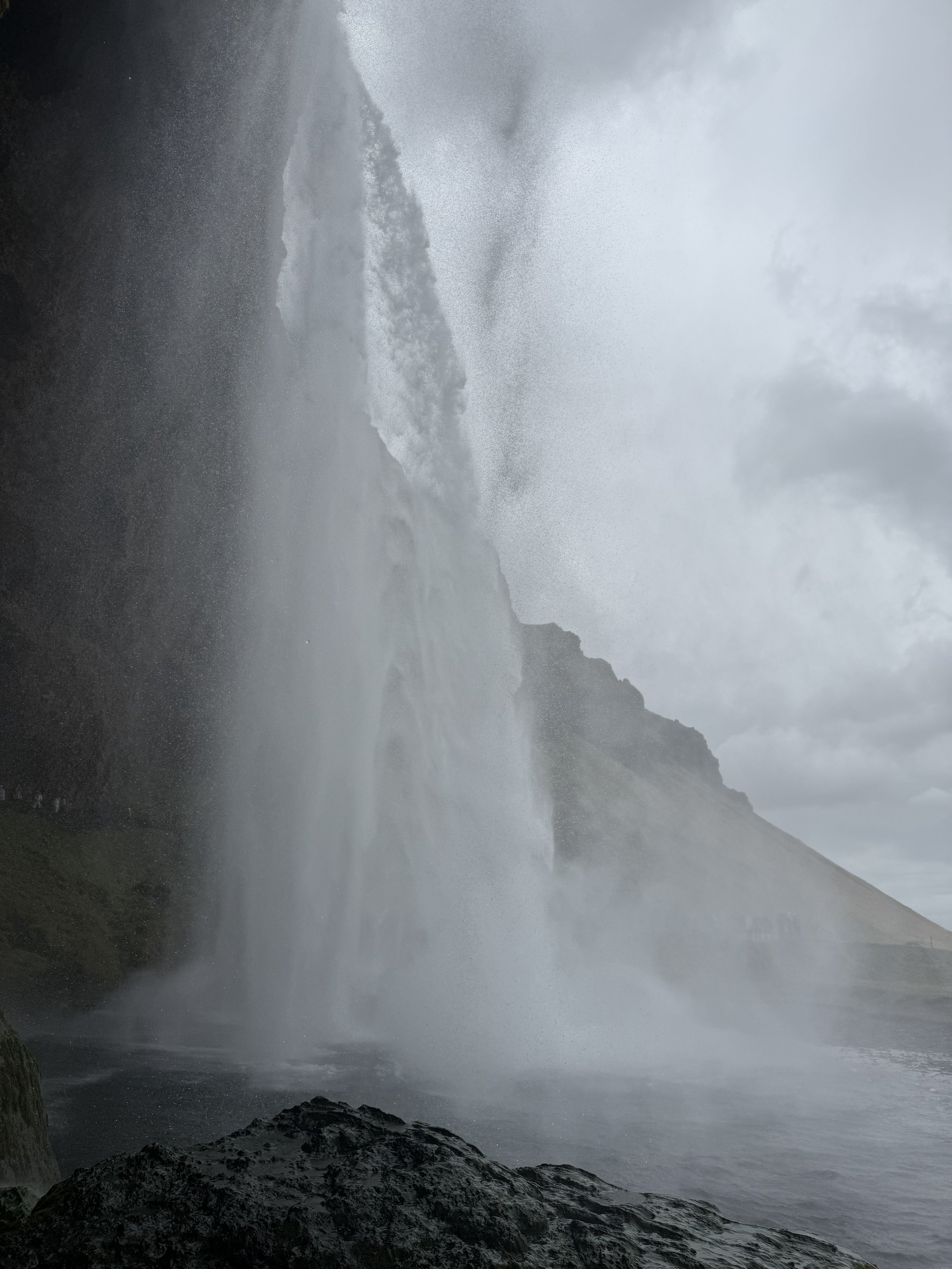
But it doesn’t end there. Ten minutes up the trail lives the ultimate introvert. A shy, yet dramatic sister fall completely hidden away inside a mossy basalt gorge that’s tucked behind a massive cliff face – Gljufrabui. Or Canyon Dweller for those of us who gave up trying to pronounce anything after day two.
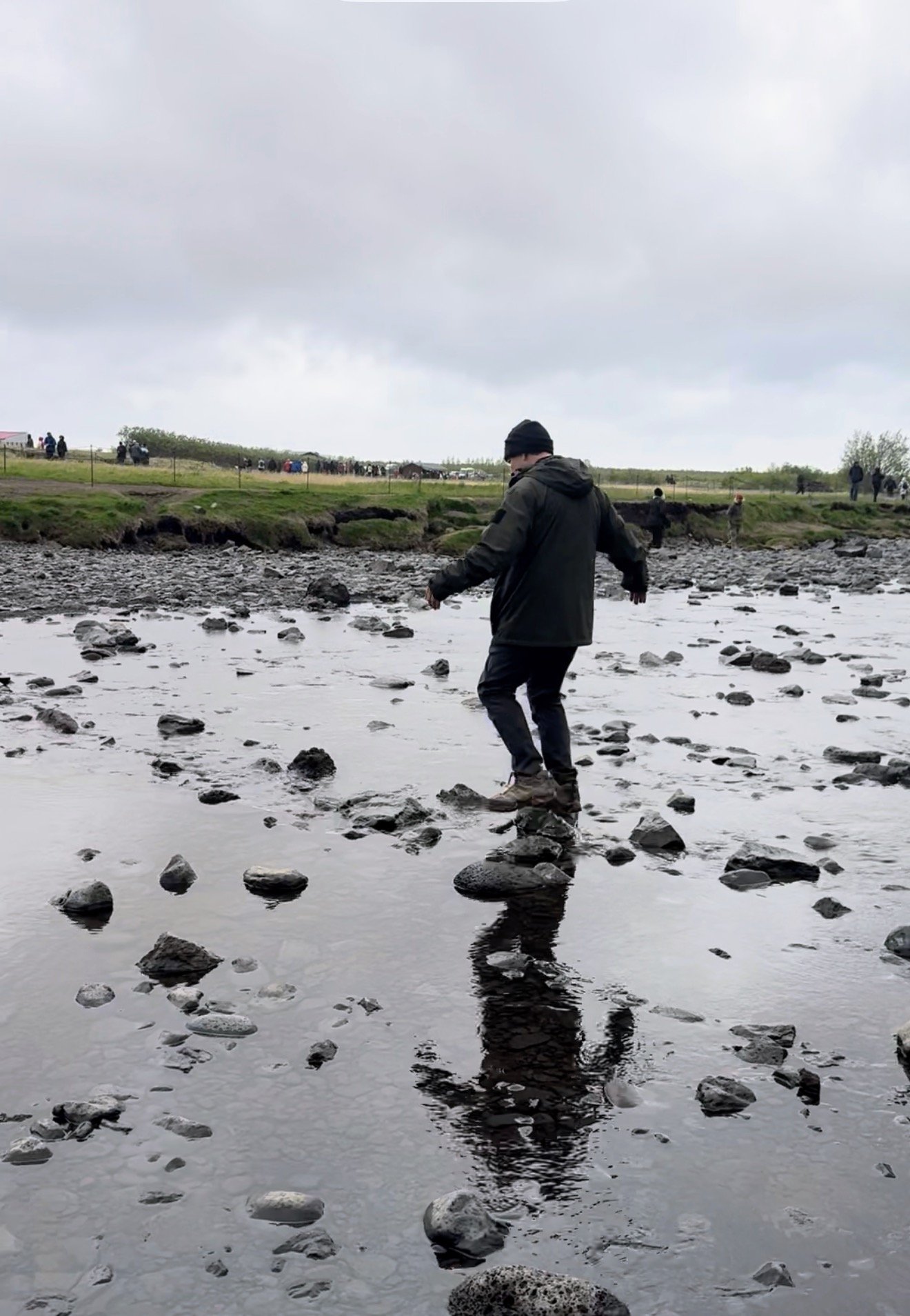
This hidden gem requires you to squeeze through a narrow rock cleft by balancing in ankle deep water across slick, submerged stones, all with the grace of a startled heron. Or maybe that’s just me. I’m certainly no ballerina, even after a year of lessons way back in the day.
Should you make it inside, the reward is a small, mossy, open-air stone chamber where a 131-foot cascade creates its own private rainstorm. Adventure with a side of Holy Cow! It’s beyond amazing.
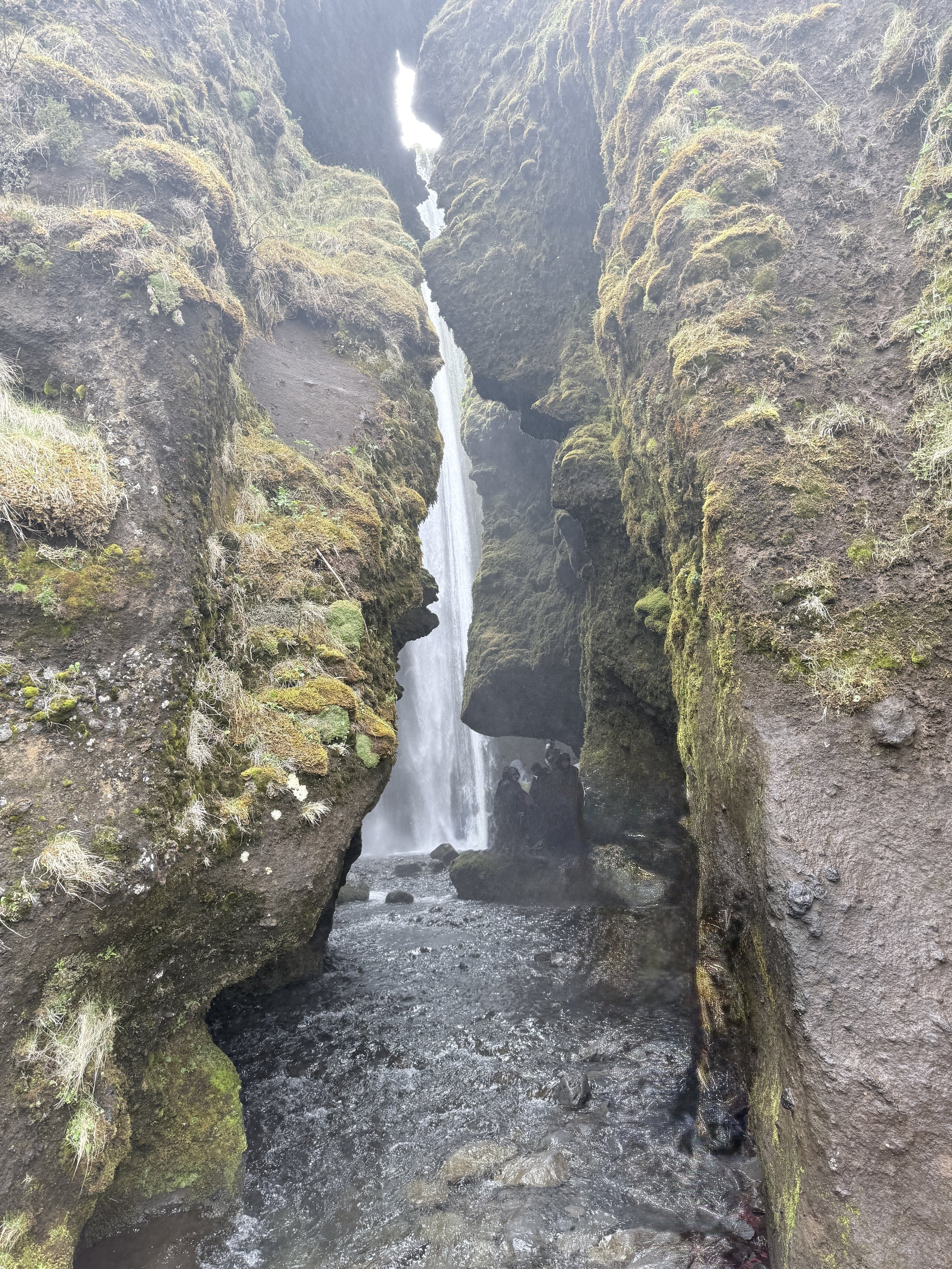
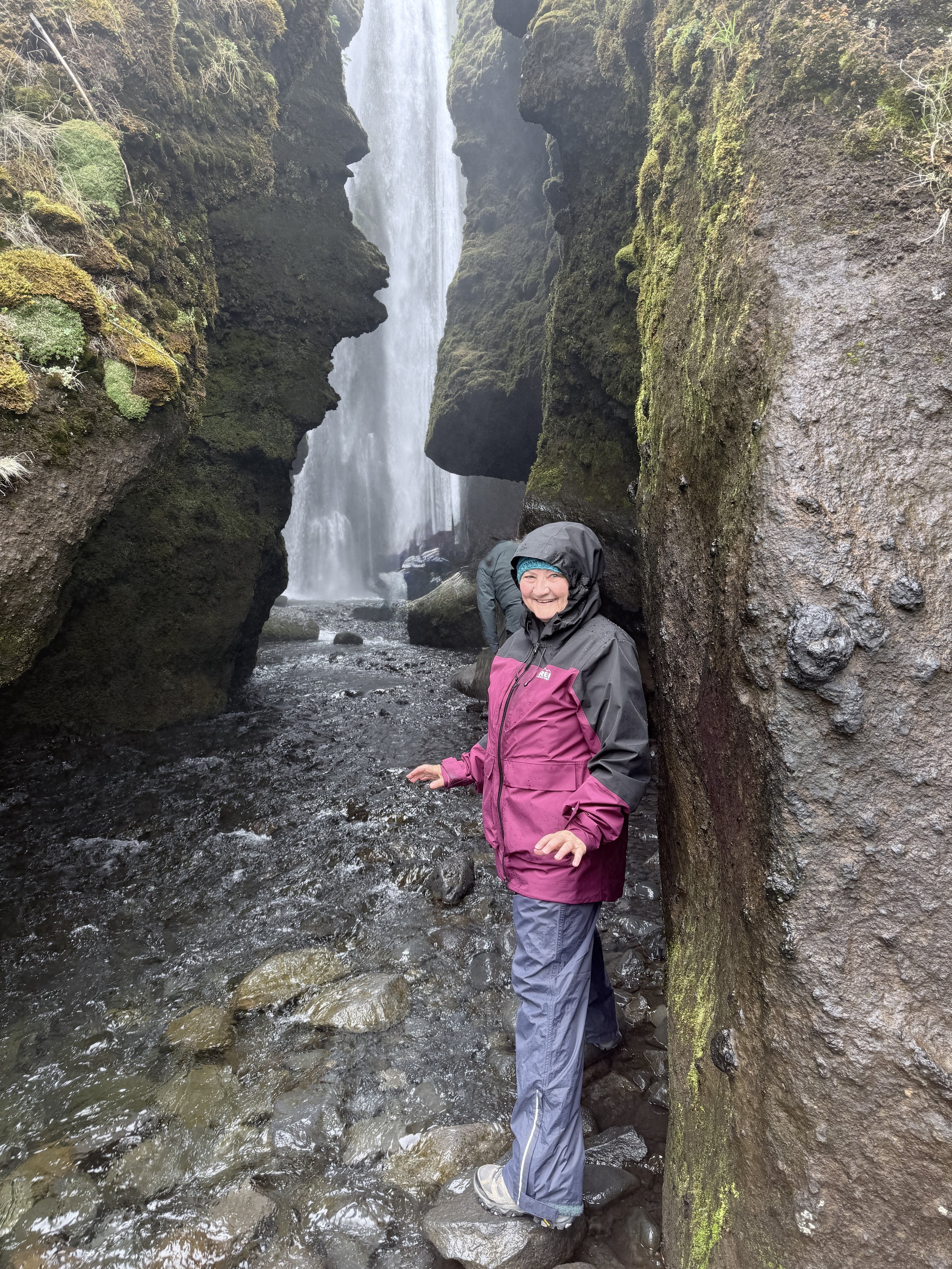
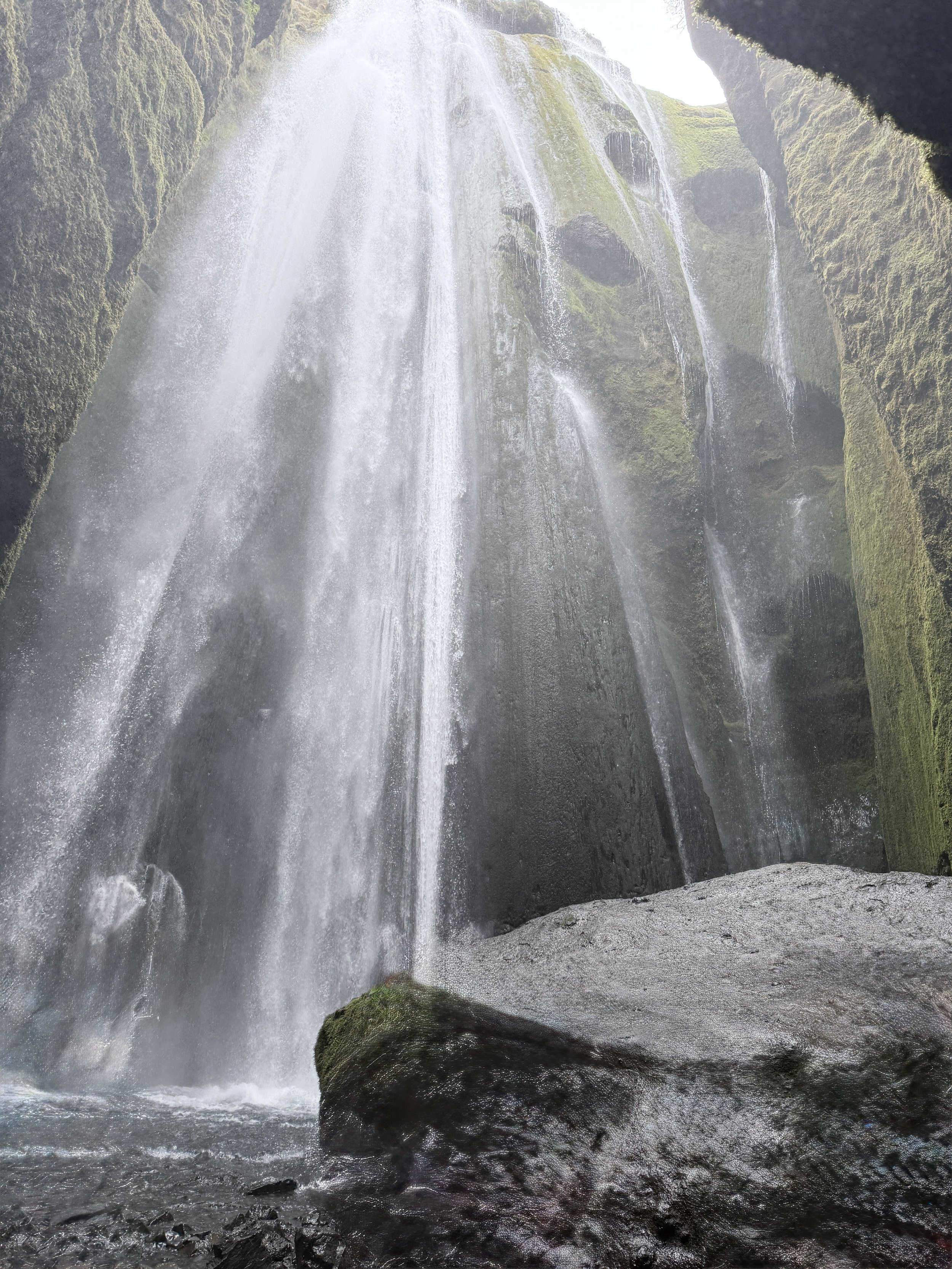
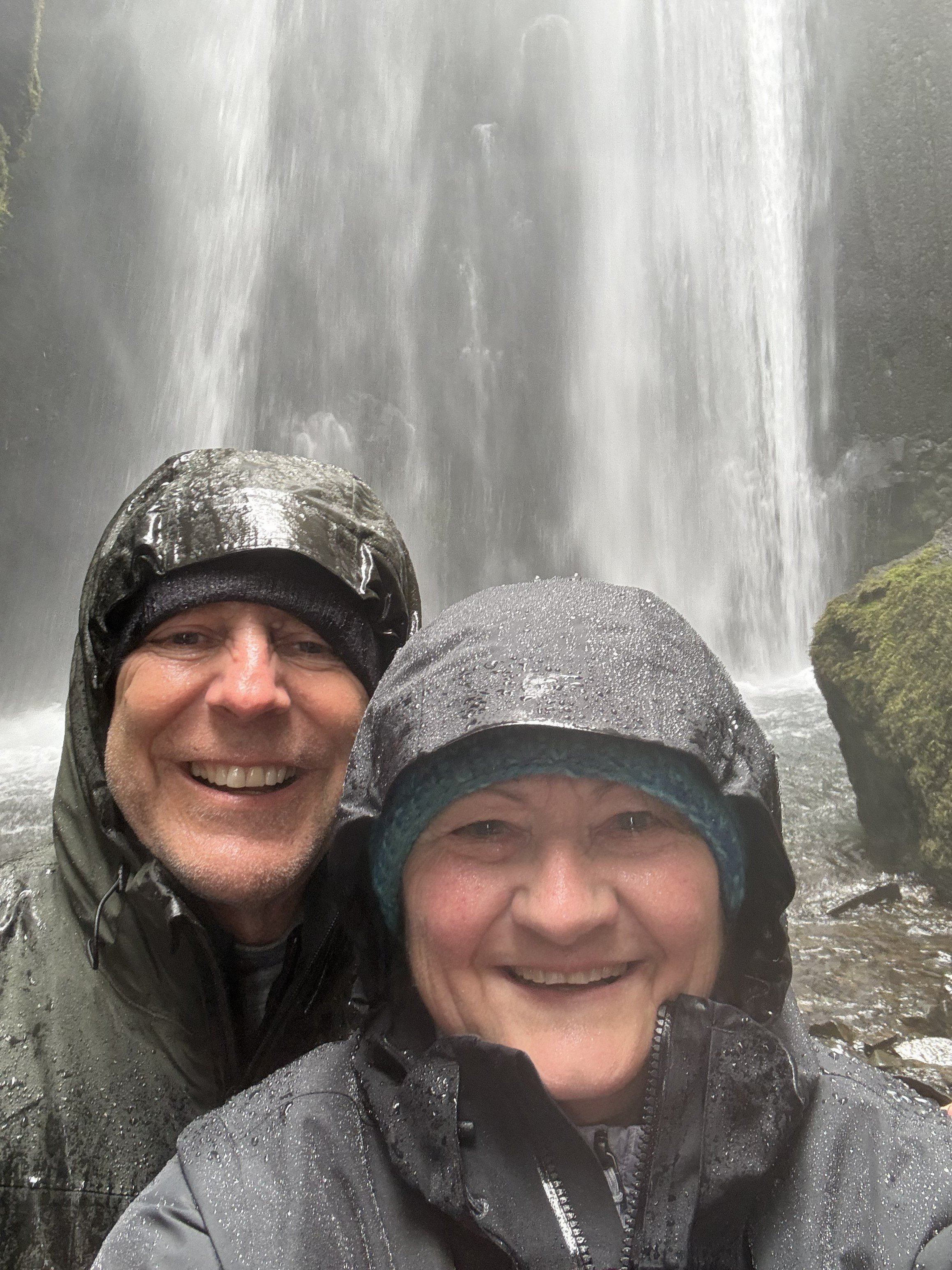
According to local lore, the slot canyon rock entrance is courtesy of Iceland’s huldufolk, or hidden people, and after seeing how well they hid this place, I’d say they’re doing a phenomenal job.
Go. Do both falls. This experience is well worth the unavoidable drenching. I promise.
SKOGAFOSS
Just down the road from Seljalandsfoss, lies Skogafoss. While it drops the exact same 197-feet, instead of gracefully inviting you behind its curtain, this fall hits the black gravel ground like a liquid freight train. At 82-feet wide, it’s a wall of pure unapologetic horsepower.
You can walk right up to the edge of the plunge pool, but even the mist feels like a firehose. Toss in a legend of Viking gold lost behind the fall, and an adventurous soul might be tempted to risk the blast zone. For the record, I’m not immune to the lure of treasure to be found, but the prospect of being pounded to bits by a force of nature has a way of stifling enthusiasm. The Viking legend would have to wait.
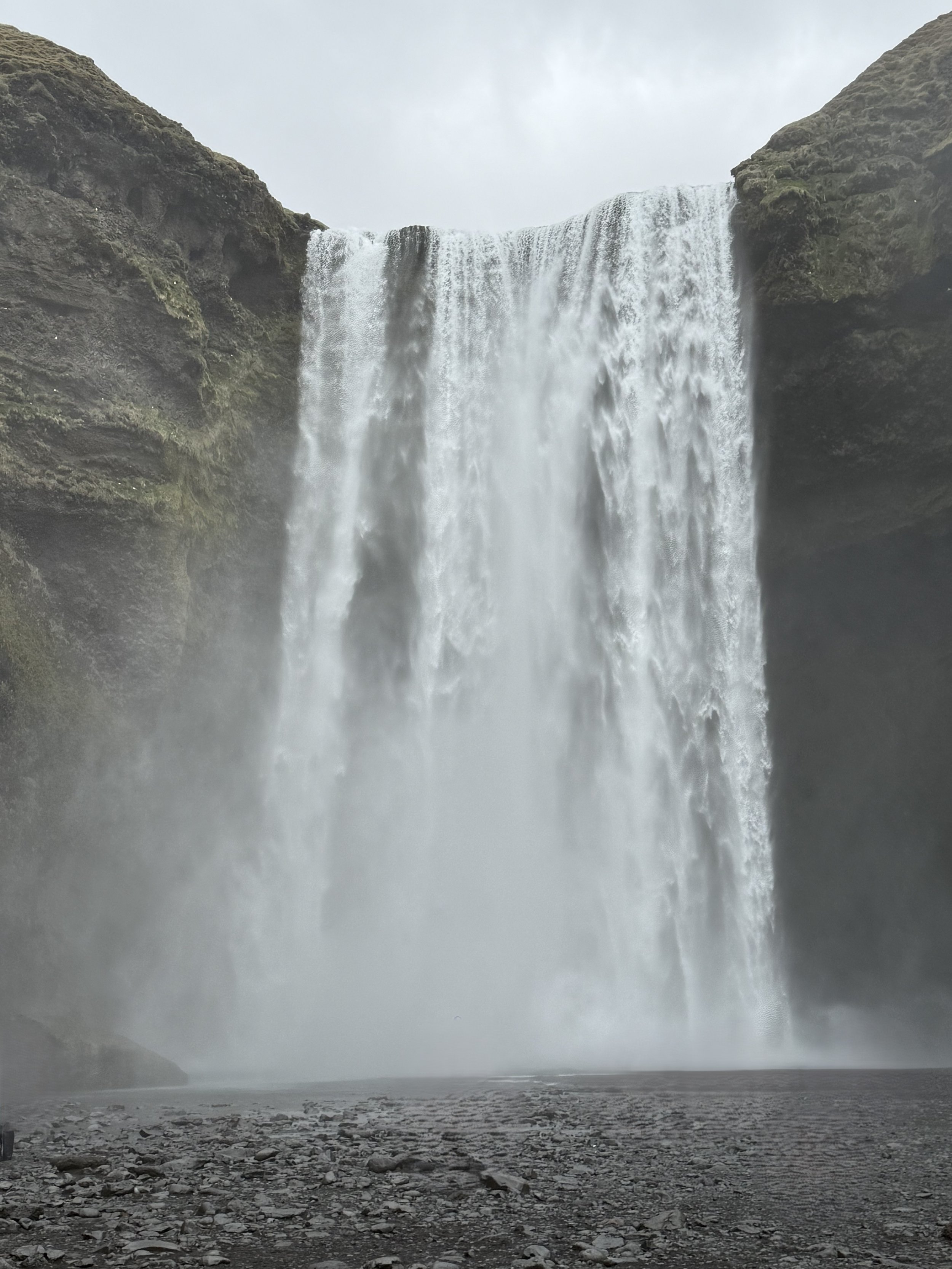
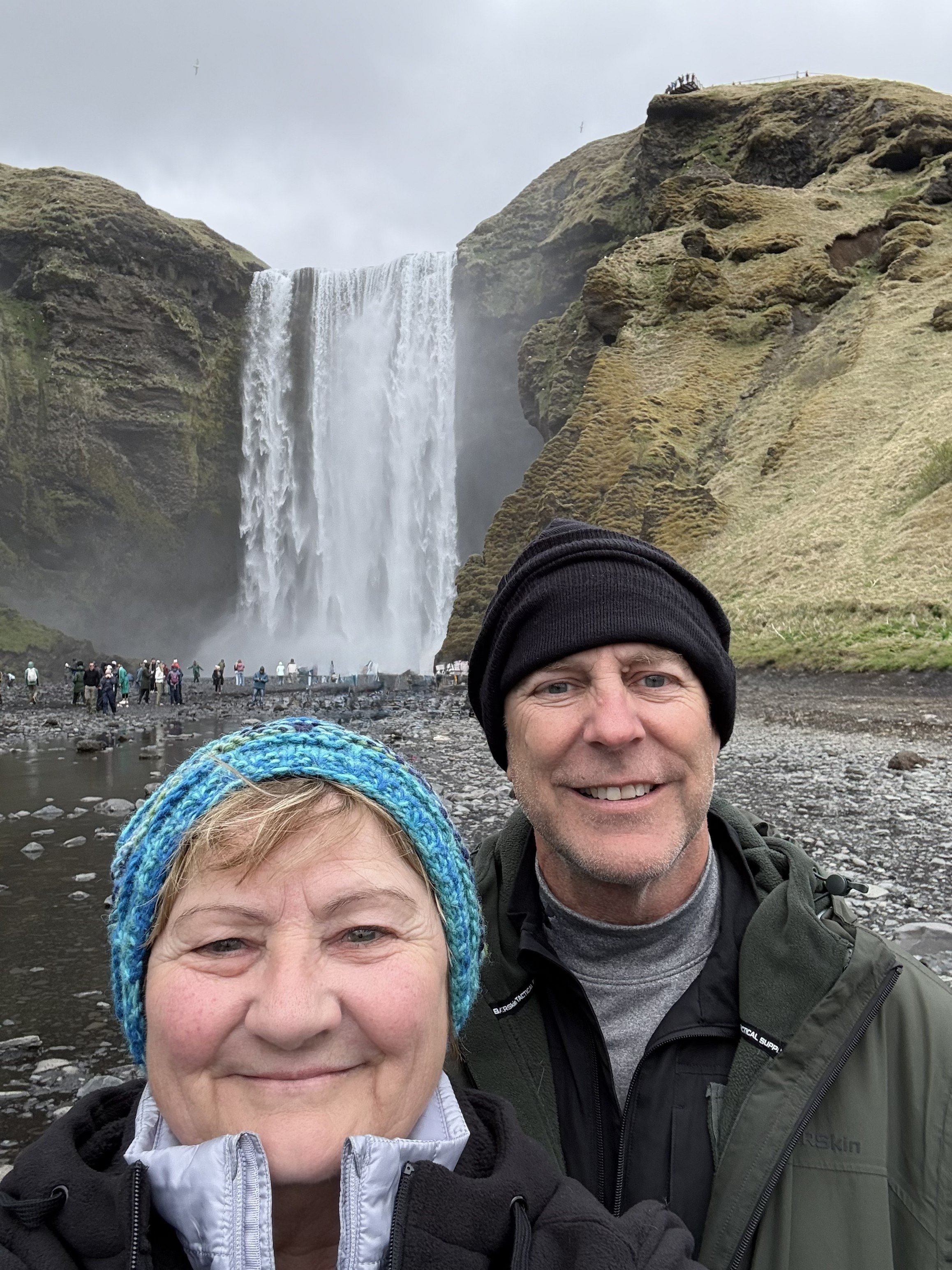
If you’d rather, there’s an alternate adventure. Just to the right of the falls, a roughly 500-step metal staircase clings to the cliffside and zigzags straight up like some wicked outdoor StairMaster. We stood at the bottom, stared up at the tiny figures inching toward the sky for a top-down panorama, and made the executive decision to admire the view from sea level.
I know what you’re thinking… hey, you conquered the imposing stairs of Grabrock Volcanic Crater a couple days prior. That’s true. It’s a feat this recently retired accountant is proud of, except our calves still had not forgiven us for the accomplishment and going the distance again wasn’t on the menu just yet. No worries though, I’ve heard a good adventurer always leaves one challenge unbeaten so they have an excuse to book another trip. Sounded perfectly reasonable to us.
RANDOM WATERFALLS HANGING OUT AT THE SIDE OF THE ROAD
They are literally everywhere. We visited in late May, right at the height of spring runoff by our reckoning, because the flow of water seemed endless. Watch this video of Barnafoss, a literal churn of glacier rapids squeezing through dark lava rock and falling into the Hvita River in dramatic fashion.
Not to be outdone by the Barnafoss swarm, I also snapped about a hundred photos of roadside falls. But honestly, after a while we stopped pointing them out, because every bend in the road seemed to reveal another ribbon of water tumbling down a mountainside.
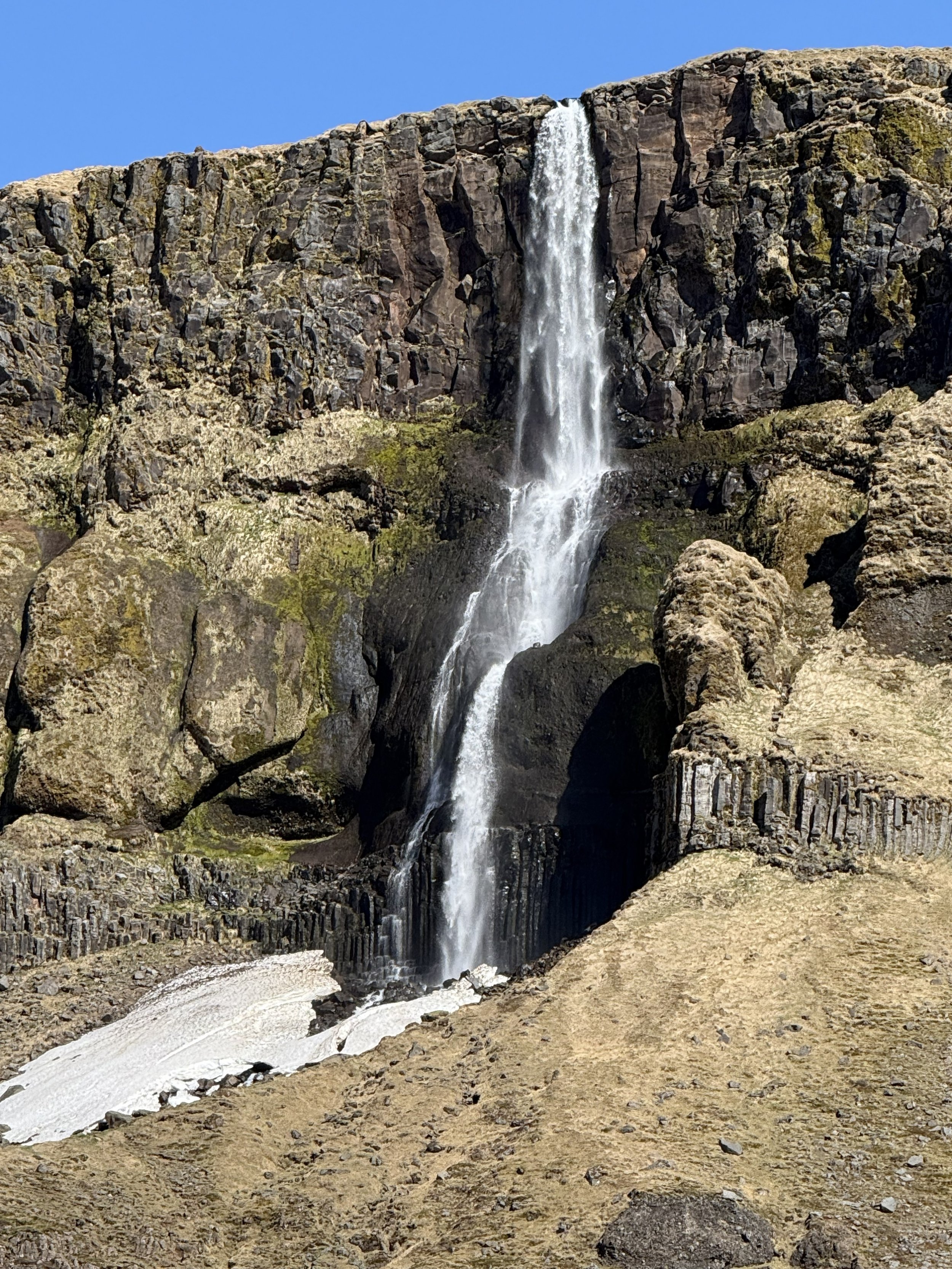
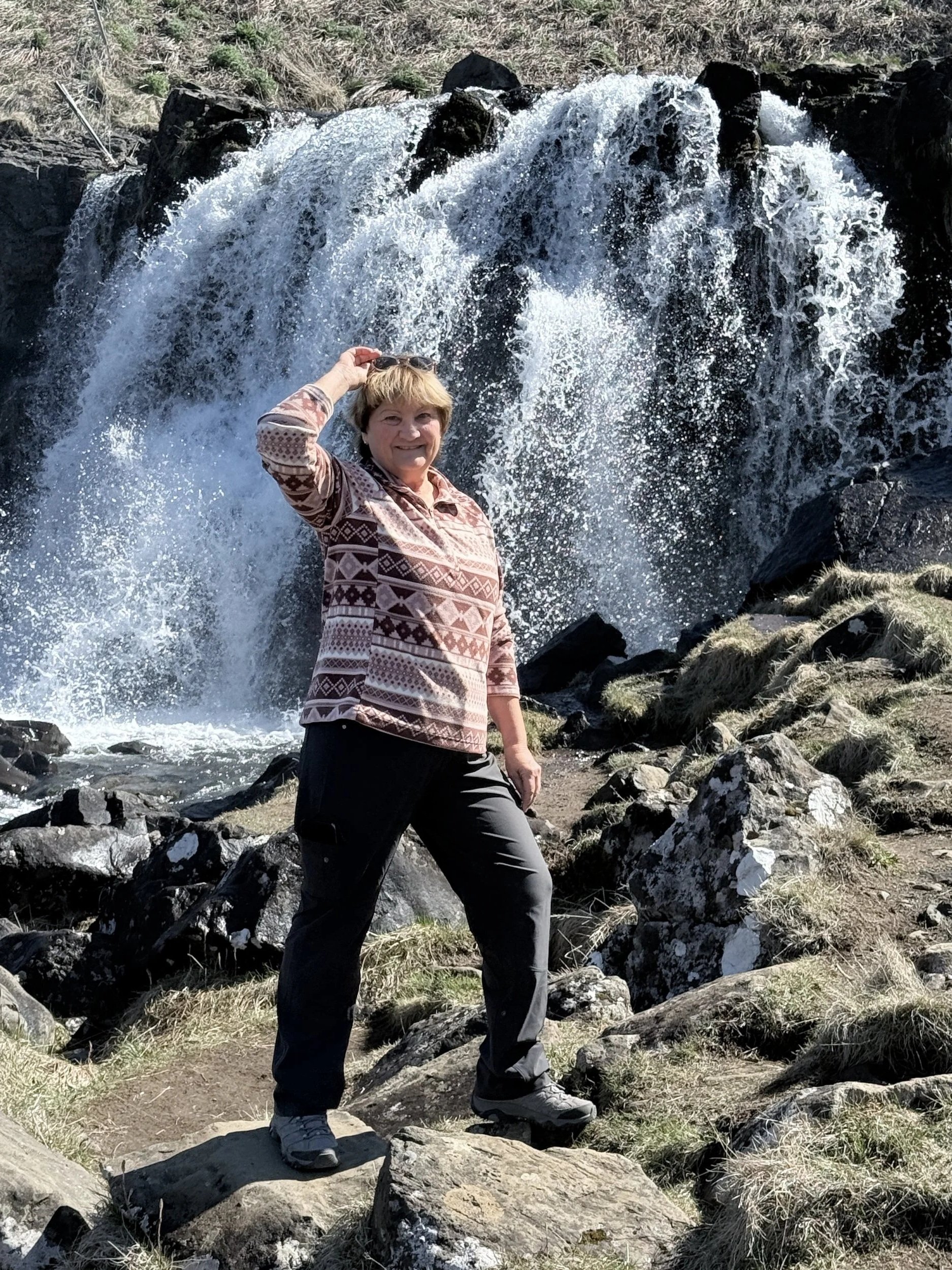
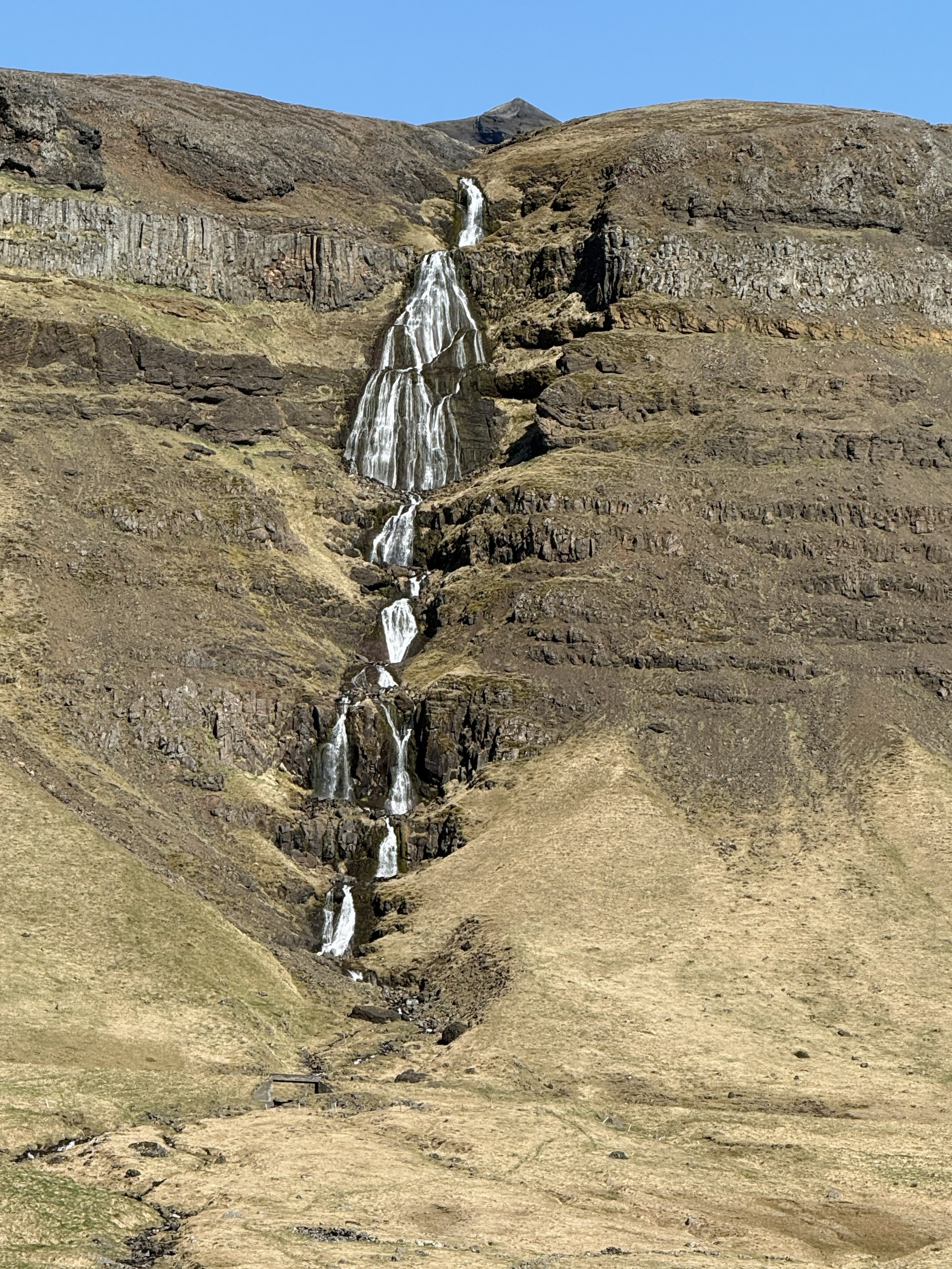
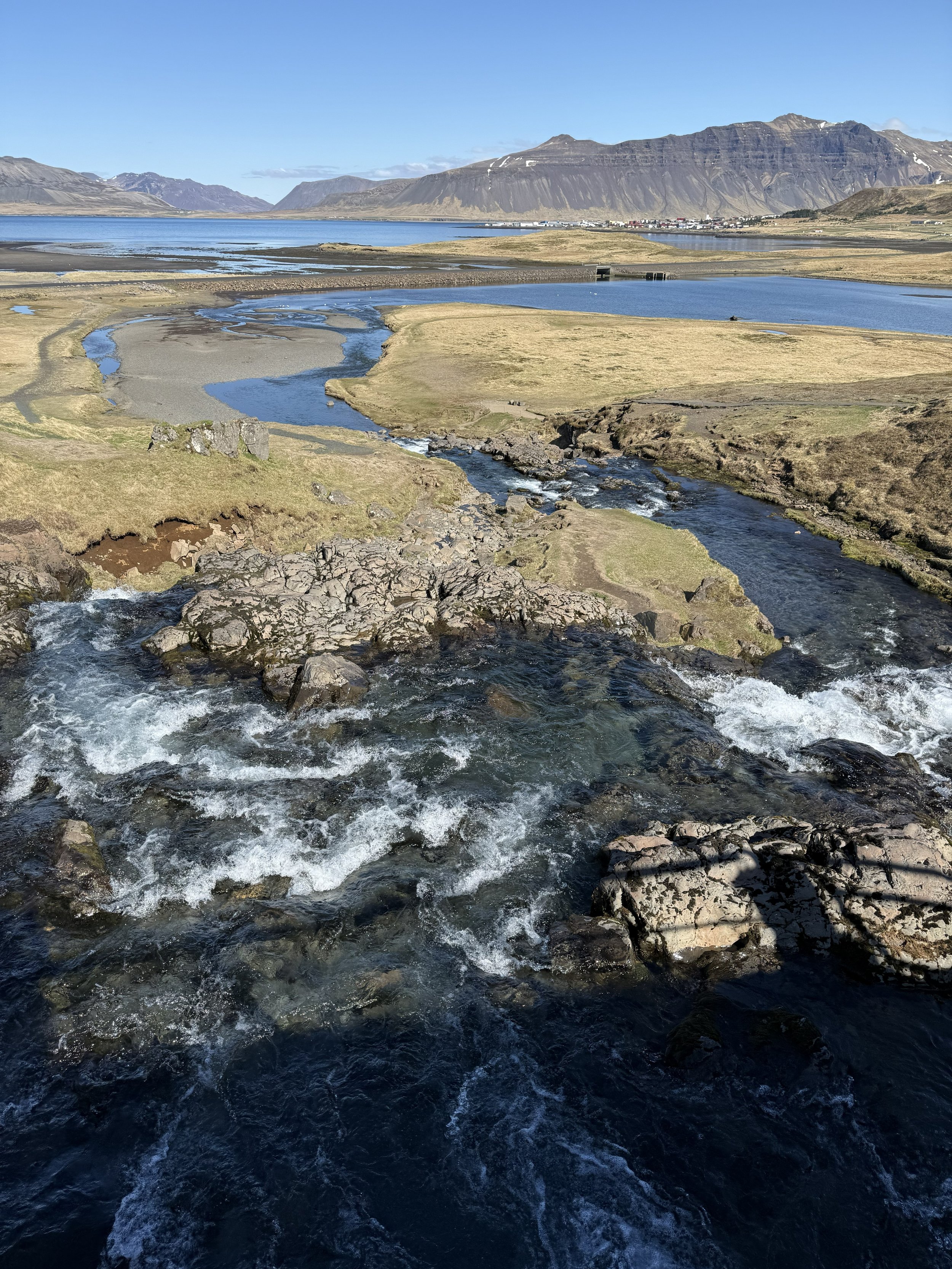
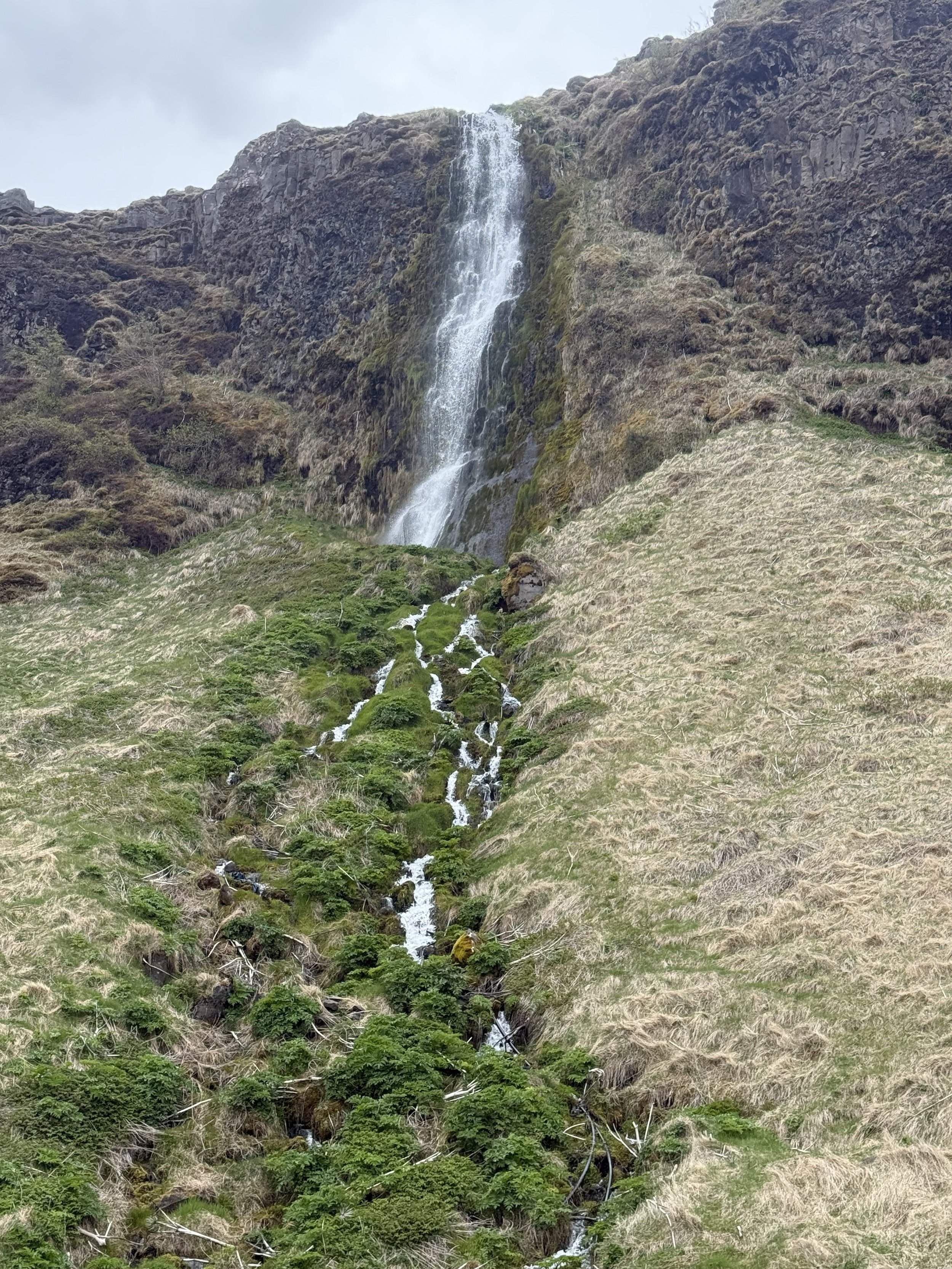
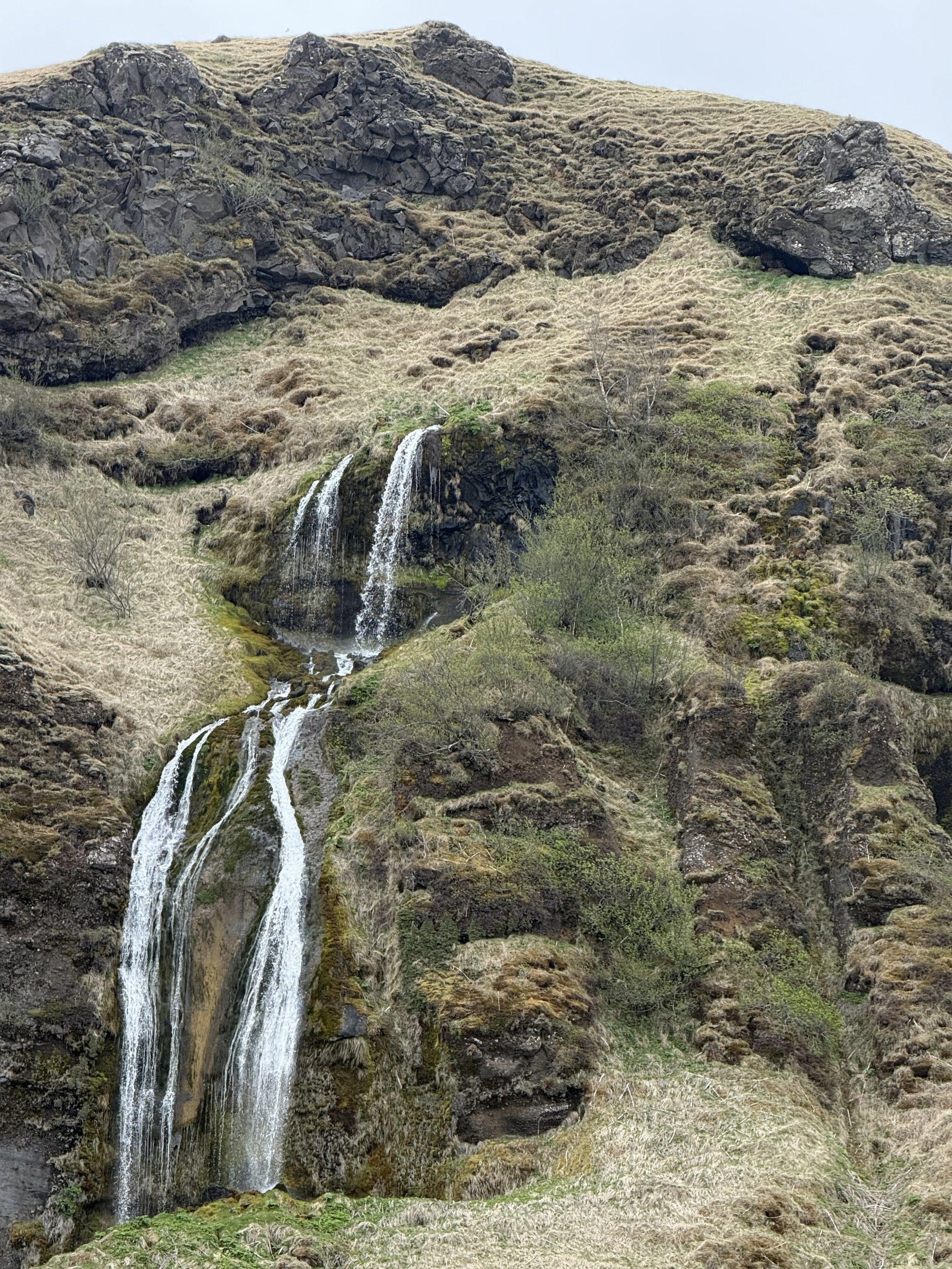
By the end of the week, waterfalls had stopped feeling like destinations and started feeling like part of Iceland’s personality. Each had its own character. One thunderous, one secretive, one graceful, one downright confrontational. But none of them were passive. They thundered beside highways, spilled from cliffs like they had somewhere to be, hid inside canyons, soaked us to the skin, and occasionally dared us to climb 500 steps for a better look.
But that’s Iceland. Water is everywhere. Falling, rushing, freezing, melting, and carving. It is part of the island’s machinery, constantly reshaping the landscape. It’s another reminder that this island isn’t simply beautiful. It’s alive and constantly changing right in front of you.
The really amazing part? We only saw a portion of what exists here. Exploring the entire Ring Road is a worthy goal, one we hope to accomplish someday. But for this trip, we came home with wet jackets and boots, sore calves, far too many waterfall photos, and absolutely no regrets.
Next up: Snaefellsnes Peninsula
See you then!